Understanding Medical Negligence and Your Rights
Medical negligence occurs when a healthcare provider fails to meet the accepted standard of care, resulting in harm to a patient. If you or a loved one has suffered due to a medical error, you have the right to seek compensation for the income and quality of life lost. Knowing what types of damages you can recover after medical negligence is crucial for making informed decisions during your recovery process.
The aftermath of medical negligence can feel daunting, as it impacts your health, finances, and overall well-being. With reliable legal support, such as that provided by legal experts at cfcklaw.com, you can better understand your rights and the steps you need to take. A knowledgeable medical malpractice attorney can guide you through the complexities and help you work towards securing the maximum compensation possible.
Medical negligence can range from surgical errors and misdiagnosis to medication mistakes and birth injuries. While these incidents differ in nature, patients’ legal rights share some common features. Quality representation can make all the difference in a successful outcome when dealing with hospitals or insurance companies.
Before proceeding with a claim, it is vital to document everything, including medical records, communications with providers, and out-of-pocket expenses. This documentation builds the foundation for proving both the cause and impact of the negligence.
Understanding what damages may be available is a helpful first step in protecting your rights and planning your next moves.
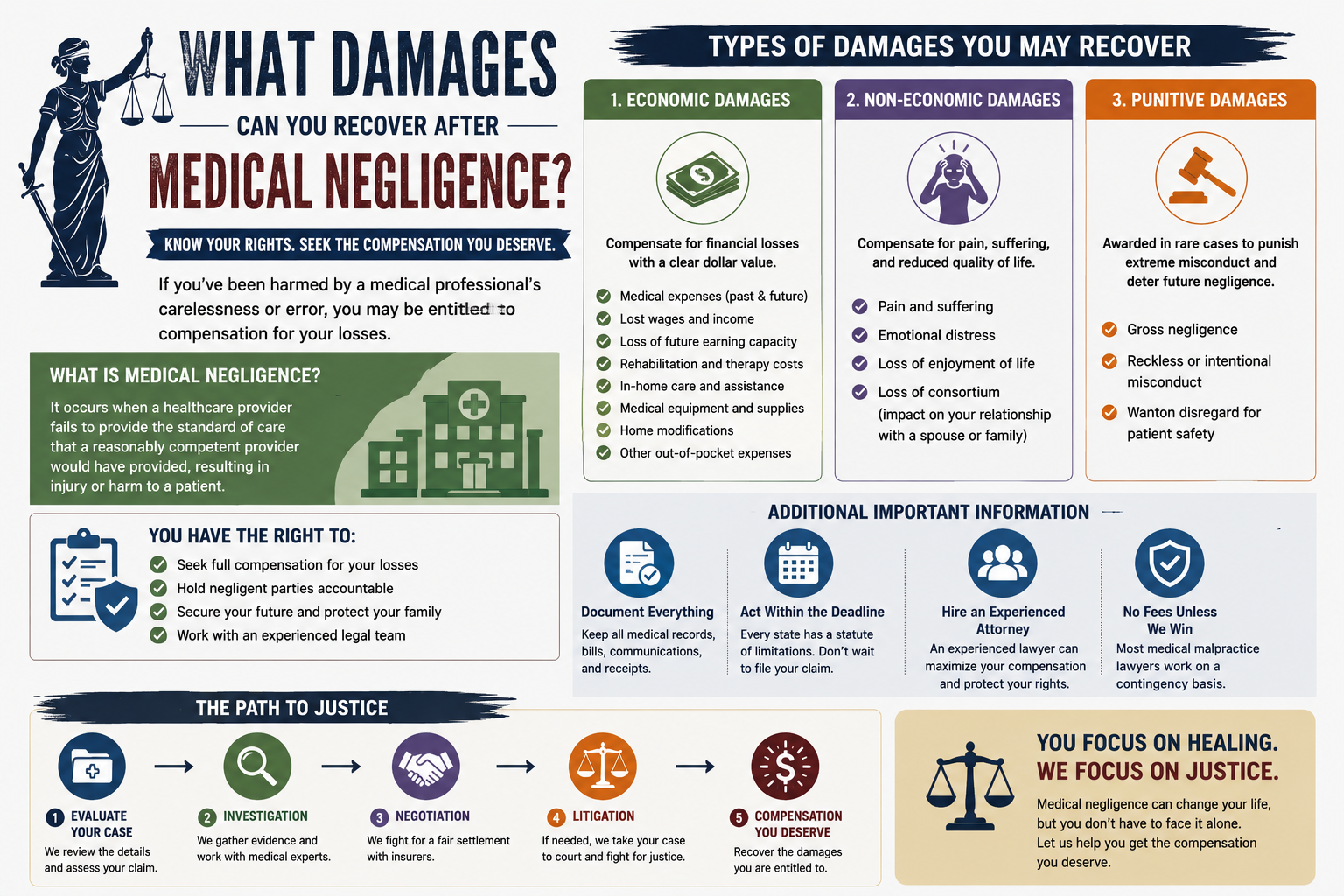
Types of Damages Recoverable After Medical Negligence
1. Economic Damages
Economic damages are the measurable financial losses suffered as a direct result of medical negligence. These typically include:
- Medical Expenses: This covers current and future costs for treatments, surgeries, hospital stays, medications, and follow-up care necessary to address the injury caused by negligence. If ongoing care or rehabilitation is required, those expenses may also be recovered.
- Lost Wages: Many victims are temporarily or permanently unable to work. Compensation can include lost income, the loss of future earning capacity, and the value of lost workplace benefits.
- Other Financial Losses: This may cover any additional out-of-pocket expenses directly related to the injury, such as home care, special transportation, or home modifications to accommodate a disability.
Often, the full scope of economic damages becomes apparent only after a thorough assessment of medical prognosis and recovery prospects. For example, if an injury leads to long-term disability, the victim might require ongoing therapy, assistive devices, or personal support, resulting in increased medical bills over a person’s lifetime. Families might also need financial support if a primary wage earner is affected. In certain situations, accountants and vocational experts are called upon to predict future lost income and the economic impact on the family.
2. Non-Economic Damages
Non-economic damages address losses that are not as easily quantified but are nonetheless significant. These include:
- Pain and Suffering: This considers physical pain, discomfort, and the emotional distress resulting from an injury. Emotional trauma, including anxiety and depression, can also be compensated under this category.
- Loss of Enjoyment of Life: If an injury prevents a victim from participating in activities or hobbies they previously enjoyed, they may be entitled to compensation for this reduced quality of life.
- Loss of Consortium: When medical negligence negatively impacts relationships with spouses or family members, such as loss of companionship or support, these damages can sometimes be recovered by loved ones.
The process of placing a value on non-economic damages is complex, sometimes requiring testimony from mental health professionals, family members, or friends about the ways life has changed for the victim. While states may have statutory limits on non-economic damages, fully articulating and documenting these losses forms an important part of the legal process. Every story of suffering is unique, and the law recognizes the lasting psychological consequences that may arise from medical harm.
3. Punitive Damages
In rare cases, courts award punitive damages to punish especially egregious or reckless conduct by medical providers. These damages are meant to deter similar actions in the future rather than to compensate the patient for specific losses. Punitive damages are awarded less frequently in medical malpractice cases and often require clear evidence of intentional wrongdoing or gross negligence.
In some jurisdictions, strict legal standards must be met for punitive damages to be even considered. Juries may evaluate the provider’s conduct, whether reckless disregard was involved, and the potential for harm to others. When awarded, punitive damages serve as a warning to healthcare providers and institutions, emphasizing the importance of patient safety and high ethical standards. Such cases are closely monitored and sometimes lead to institutional changes beyond individual compensation.
The Importance of Legal Representation
Navigating a medical negligence claim can be complex, especially when calculating damages. An experienced attorney can help evaluate your losses, gather and present evidence, and negotiate aggressively with insurance companies or hospitals. Legal professionals understand how to build a compelling case, so you receive full compensation for your injuries. Major medical malpractice verdicts, such as the recent record-setting cases reported by NBC News, underscore the importance of strong legal representation and thorough damage assessments.
In addition, legal representatives may employ medical experts to review and explain the care provided, offer opinions on whether standards were breached, and clarify the effects of negligent treatment. The use of medical experts is not only common but essential in substantiating claims and translating complex healthcare issues for judges and juries. By providing this insight, your legal team is better able to demonstrate the real impact of malpractice.
Limits and Statutes in Medical Negligence Cases
Some states set limits, or “caps,” on the amount of non-economic damages recoverable in medical malpractice cases. It is important to consult state-specific laws and statutes of limitations for filing. Missing these deadlines can forfeit your right to compensation, regardless of the merits of your case. For further details on malpractice laws, the American Medical Association provides helpful state-by-state information and updates.
Statutes of limitations are strictly enforced, and exceptions are rarely made. Some states may have different deadlines for adults versus minors, and others might allow extra time if injuries are not immediately discovered. Understanding these technicalities can make the difference between a successful claim and one that is barred from court. Proactive monitoring of your deadlines and compliance with procedural requirements increases your chances of a favorable outcome. Consult with a qualified attorney as soon as possible to protect your rights.
Conclusion
Victims of medical negligence may face immense physical, emotional, and financial challenges, but the legal system offers pathways to recover compensation for these losses. Understanding what damages can be recovered after medical negligence is essential in seeking justice and holding responsible parties accountable. Working with experienced legal counsel ensures you receive knowledgeable guidance throughout the process and maximizes your potential for recovery.
In summary, recognizing the broad scope of recoverable damages and the importance of timely, thorough legal action empowers victims to make informed choices. Regardless of the type or severity of negligence, you have recourse to pursue accountability and improve patient safety for others. Remember, you are not alone—there are resources and advocates ready to support you on the road to justice and healing.