Introduction
Offshore company formation is often misunderstood due to media portrayals of secrecy and wrongdoing, yet it has become a mainstream strategy for businesses of all sizes worldwide. Many companies use a global offshore company to improve their operational efficiency, enhance asset protection, and gain access to international markets. The reputation of offshore entities has evolved, and an increasing number of entrepreneurs are considering them as a legitimate way to bolster business growth and efficiency.
It is important to differentiate between the myths and facts about offshore companies so business owners can make informed choices by understanding how offshore structures work and their purpose, and organizations and individuals can better assess the appropriateness of offshore incorporation for their unique needs. Debunking common misconceptions paves the way for educated, responsible, and compliant use of offshore companies in today’s globalized market.
For an in-depth overview, refer to detailed guides by established business news outlets like Forbes that address both the pros and cons of setting up an offshore corporation.
Regardless of your business size, learning the realities of offshore company formation is essential to success in the international marketplace. The following sections dispel the top myths and outline what to expect during the process.
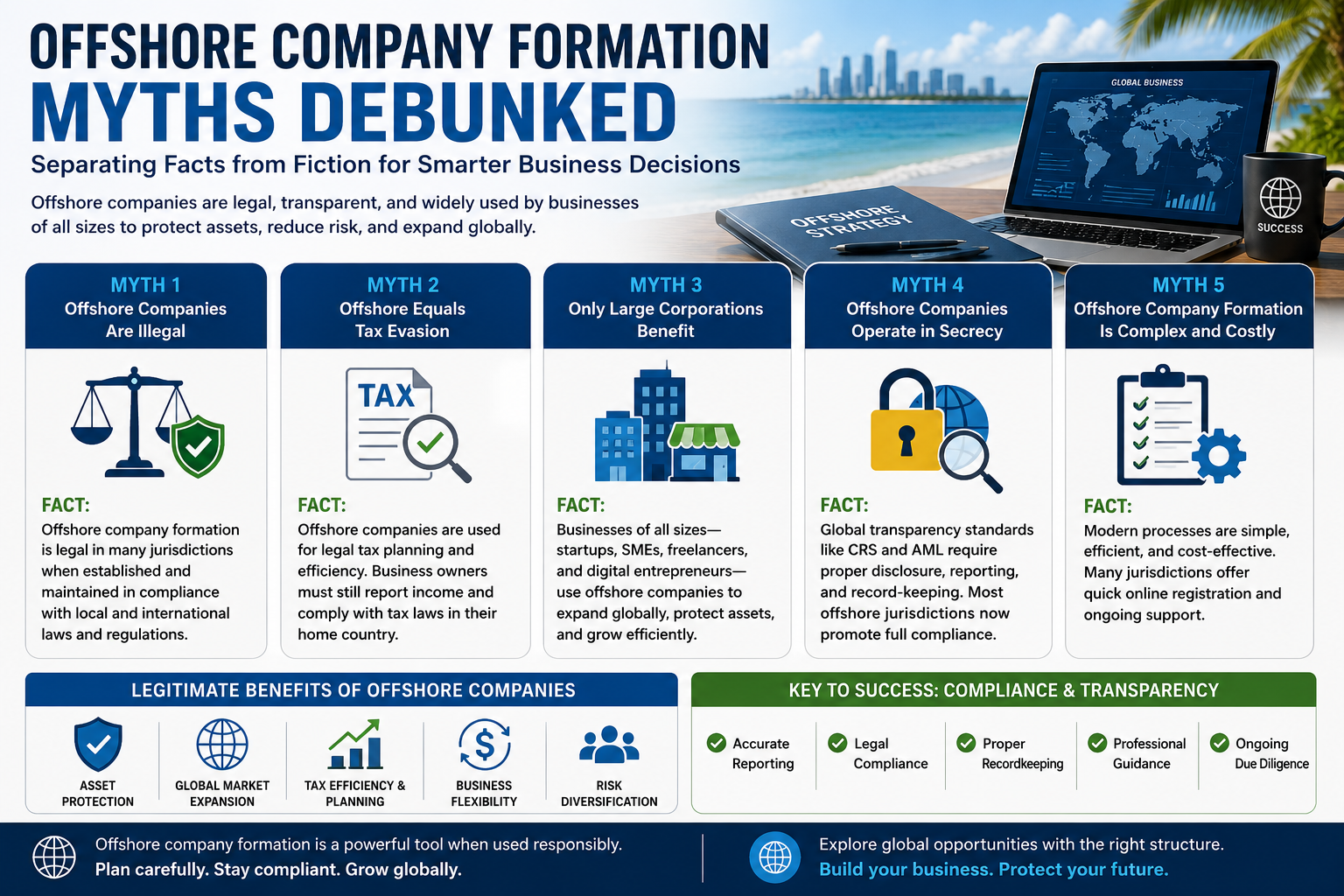
Myth 1: Offshore Companies Are Illegal
There is a widespread misconception that establishing an offshore company is inherently illegal. In reality, setting up an offshore entity is permitted in many jurisdictions, provided all necessary legal frameworks and compliance measures are met. Businesses routinely use offshore companies to facilitate cross-border trade, streamline international tax planning, and structure investments effectively. Governments themselves often encourage this through incentives designed to attract foreign capital and foster global business relationships. Maintaining transparency and adhering to both local and international requirements ensures that offshore activities remain within the law.
It’s worth noting that many countries have recognized the benefits of welcoming responsible foreign business activity, thereby creating favorable legislative environments for international entrepreneurs. Offshore companies formed in compliance with regulations can serve as a vital mechanism for managing international contracts, protecting valuable assets, and identifying advantageous legal structures. Bearing this in mind, potential incorporators benefit from consulting legal experts to ensure continued compliance and informed decision-making at every step.
Myth 2: Offshore Equals Tax Evasion
Another common myth is that offshore companies are designed solely to evade taxation. While certain jurisdictions offer favorable tax regimes to attract international businesses, legal responsibilities to report income and pay taxes do not disappear for offshore entities. Home country tax authorities still require proper reporting, and numerous treaties and cooperation agreements facilitate the exchange of information between nations to address tax evasion. There is a clear line between legal tax planning and unlawful tax evasion, and reputable offshore service providers are careful to promote only lawful solutions. For more on this distinction, see Investopedia’s guide to tax evasion.
Modern offshore arrangements often involve legitimate strategies for tax efficiency, such as taking advantage of double taxation treaties, reinvesting profits internationally, or optimizing group corporate structures. By adhering to anti-money laundering norms and full disclosure practices, legitimate businesses demonstrate that their offshore presence is not about hiding assets, but about legally maximizing their global opportunities within the boundaries set by law.
Myth 3: Only Large Corporations Benefit from Offshore Companies
It is a mistake to assume that offshore companies are exclusively for global conglomerates or high-net-worth individuals. In practice, small and medium-sized enterprises (SMEs), startups, and even solo entrepreneurs use offshore structures to expand internationally, access new markets, and protect intellectual property. For instance, a freelance software developer with clients across continents might use an offshore company to simplify cross-border invoicing and payment receipt. Asset protection, risk diversification, and streamlined international business operations provide tangible advantages for businesses of all sizes.
Additionally, offshore models are increasingly being adopted by digital nomads, consultants, and professionals who work remotely and have clients or projects in different countries. These entities can help streamline business administration, reduce cross-border transaction costs, and provide a stable, recognized structure for international contracts and agreements. By adapting to the global digital economy, smaller businesses are discovering the real competitive edge that offshore structures can offer.
Myth 4: Offshore Companies Operate in Secrecy
The stereotype of secretive offshore companies is outdated. Recent years have seen major reforms across many classic offshore jurisdictions to comply with evolving international transparency standards. Regulations such as the Common Reporting Standard (CRS) have enabled automatic information sharing among tax authorities worldwide, making it difficult for companies or individuals to hide assets or evade compliance checks. These regulatory frameworks help deter financial crimes and bolster confidence in the legitimacy of offshore structures.
Today, most reputable offshore jurisdictions require a certain level of beneficial ownership disclosure, record-keeping, and annual compliance reporting. As such, those looking to use offshore companies should expect substantial oversight and benefit from selecting trustworthy partners and advisors. This shift has helped legitimate participants maintain good standing both locally and internationally while ensuring that the offshore sector moves away from its outdated reputation for secrecy.
Myth 5: Offshore Company Formation Is Complex and Costly
The perception that forming an offshore company requires immense resources and legal expertise is no longer accurate. Many jurisdictions now offer simple, efficient, and cost-effective incorporation procedures to attract global entrepreneurs. Assistance from experienced professionals ensures that the necessary documents and compliance standards are met, but technological advances in company formation have leveled the playing field. As long as due diligence is performed in researching and choosing a reputable jurisdiction, offshore formation can be a practical option for a broad spectrum of businesses and individuals.
Furthermore, service providers have developed streamlined, digital-first processes that help reduce both time and expenses involved in setup and ongoing management. Online platforms provide user-friendly tools and clear instructions to facilitate compliance, enabling new business owners to confidently handle requirements ranging from simple document submission to advanced due diligence checks. In short, offshore company formation has evolved to prioritize simplicity, scalability, and customer support.
Conclusion
Getting to the truth about offshore company formation begins by separating fact from fiction. Offshore companies can serve multiple legitimate purposes, from asset protection to global expansion. By understanding relevant legal frameworks and consistently adhering to international regulations, entrepreneurs can take advantage of the benefits that offshore structures provide. Careful planning, transparency, and compliance are key to leveraging offshore companies in a way that aligns with both business goals and legal obligations.
The global business landscape is rapidly evolving, and offshore company formation continues to adapt alongside new legislation and technological advancements. While offshore structures will always require careful attention to due diligence and regulatory developments, they remain a powerful option for businesses wishing to safeguard assets, tap into new markets, or operate with greater financial efficiency. Ultimately, it’s education and ongoing vigilance that empower business owners to maximize benefits while remaining fully compliant and aboveboard.