What You Don’t See Can Cost You the Most
Most homeowners focus on what is visible. A well-kept lawn, trimmed hedges, and a clean driveway often feel like the true measure of a healthy property. But beneath that surface is a network of systems that quietly keep everything running.
Water lines, sewer connections, septic systems, and root networks all interact in ways that are easy to ignore until something goes wrong. The problem is that when underground systems fail, repair costs are often far higher than the cost of any visible maintenance issue.
Understanding this hidden layer of your property is essential for preventing damage that can spread quickly and affect both structure and sanitation.
The Hidden Infrastructure Beneath Your Home
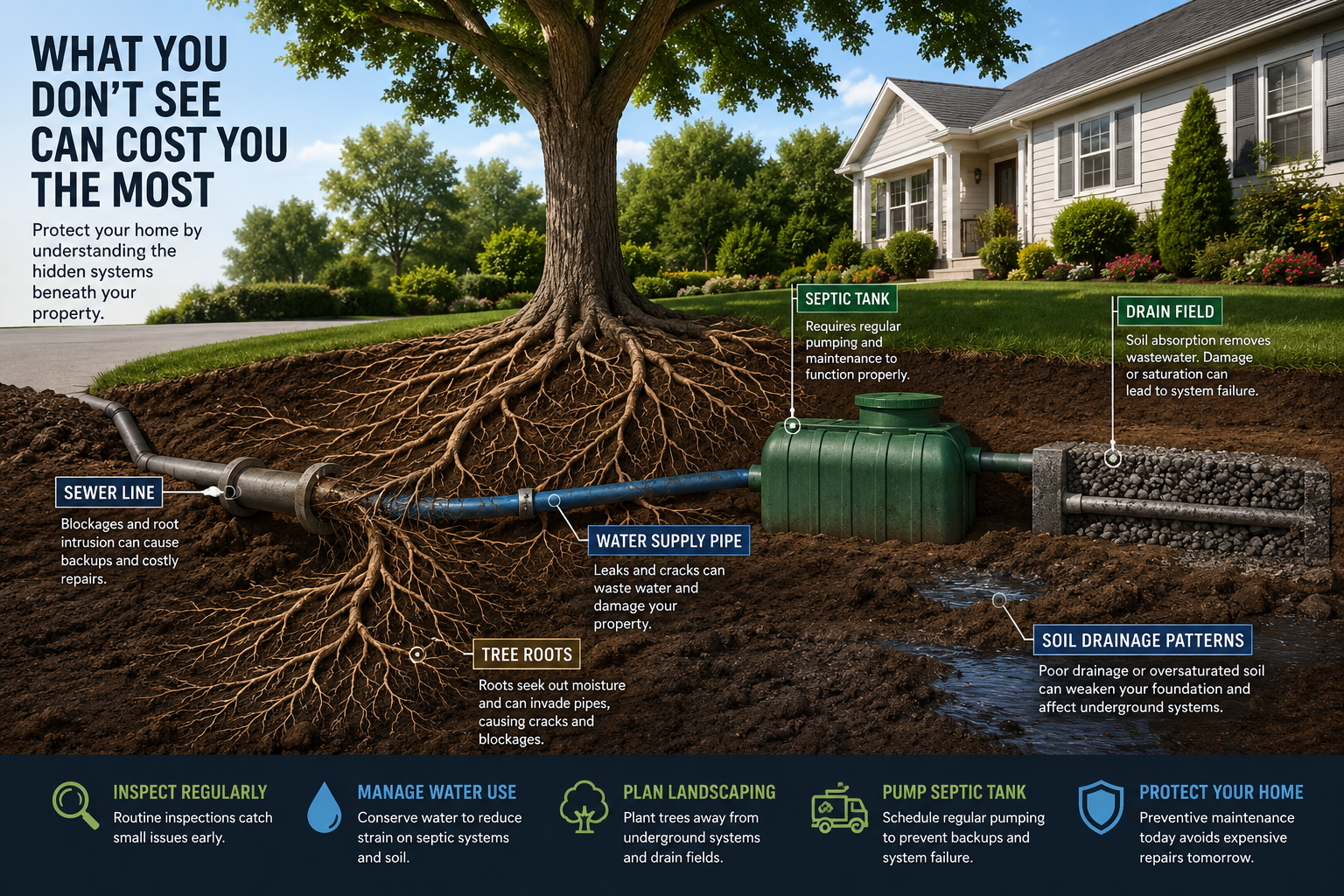
Every property relies on underground systems working in harmony. These include:
- Sewer and wastewater lines
- Septic tanks and drain fields
- Water supply pipes
- Tree root networks
- Soil drainage patterns
When one part of this system is disrupted, the effects rarely stay isolated. A small blockage can turn into a backup inside the home. Root intrusion can crack pipes. Poor drainage can weaken soil stability over time.
The challenge is that these systems do not fail suddenly in most cases. They degrade slowly, making it difficult to notice until the damage becomes serious.
How Landscaping Can Quietly Disrupt Underground Systems
One of the most overlooked threats to underground infrastructure is landscaping, especially large trees. Trees are valuable for shade and aesthetics, but their root systems naturally seek out moisture. That moisture often comes from underground pipes and septic areas.
Over time, roots can:
- Enter small cracks in pipes
- Expand and block water flow
- Shift soil around utility lines
- Increase pressure on buried structures
That is where professional maintenance becomes essential. Services like tree services in Aldie, VA, help manage root growth and canopy balance so trees remain healthy without interfering with critical underground systems. Proper trimming and root management reduce the risk of invasive growth reaching plumbing lines or septic fields.
Ignoring this connection between landscaping and infrastructure often leads to expensive excavation work that could have been avoided with early intervention.
The Slow Damage Effect: Why Problems Go Unnoticed
One of the most dangerous aspects of underground damage is its slow development. Homeowners may not notice anything until symptoms become visible inside the home or yard.
Early warning signs often include:
- Slow-draining sinks or tubs
- Gurgling sounds in pipes
- Unpleasant odors near drains or outdoor areas
- Patches of unusually green grass over buried lines
- Soft or sinking soil in specific yard areas
Each of these signs can indicate a deeper issue forming beneath the surface. The longer they are ignored, the more extensive the repair becomes.
Septic Systems: The Hidden Engine of Rural Homes
For properties that rely on septic systems, the underground infrastructure becomes even more critical. Unlike municipal sewer systems, septic tanks must handle on-site waste processing. It makes them sensitive to both usage patterns and surrounding soil conditions.
A septic system depends on a delicate balance between bacteria, drainage, and filtration. When this balance is disrupted, waste can back up into the home or overflow into the yard.
Common causes of septic system failure include:
- Lack of regular pumping
- Excess water usage
- Soil compaction around drain fields
- Root intrusion from nearby vegetation
In regions where septic systems are common, services such as Winchester, VA septic tank services, play an important role in maintaining system health. Regular inspection and pumping help prevent buildup that can lead to blockages, backups, or environmental contamination.
The Connection Between Soil, Roots, and Waste Systems
What many homeowners do not realize is how closely septic systems and landscaping interact. Trees planted too close to drainage fields can cause long-term structural issues underground. At the same time, oversaturated soil can affect both root growth and waste filtration.
It creates a cycle where one issue worsens the other:
- Excess moisture attracts roots
- Roots damage drainage lines
- Damaged drainage increases soil saturation
- Saturated soil weakens septic efficiency
Breaking this cycle requires careful planning and routine maintenance of both landscaping and septic infrastructure.
Preventive Steps to Protect Your Property
Preventing underground damage is far more effective than repairing it. A proactive approach can extend the life of both your landscaping and utility systems.
Here are key steps homeowners should consider:
1. Plan Tree Placement Carefully
Avoid planting large trees near sewer lines, septic fields, or water pipes. Even young trees can develop aggressive root systems over time.
2. Schedule Routine Inspections
Both plumbing and septic systems should be checked periodically to identify early signs of wear or intrusion.
3. Manage Water Usage
Excess water can overload septic systems and soften soil, making it easier for roots to spread.
4. Monitor Yard Changes
Unusual changes in grass color, soil softness, or drainage patterns should never be ignored.
5. Maintain Landscaping Balance
Healthy trees are important, but unmanaged growth can become a structural risk underground.
When Small Issues Turn Into Major Repairs
One of the biggest mistakes homeowners make is delaying action when early signs appear. Underground systems rarely fix themselves. A small root intrusion or minor blockage can escalate into:
- Full pipe replacement
- Septic drain field failure
- Soil excavation and restoration
- Water contamination risks
What starts as a minor maintenance issue can quickly turn into a major construction project affecting both the home and yard.
Bringing It All Together
A property is more than what is visible on the surface. The real foundation of its health lies beneath the ground, where plumbing, septic systems, soil, and root networks constantly interact.
When these systems are managed properly, they work quietly in the background without issue. But when they are ignored, the consequences can be expensive and disruptive.
Understanding how landscaping choices and underground infrastructure interact is one of the most effective ways to protect long-term property value. Careful planning, routine maintenance, and timely professional support all play a role in keeping everything balanced below the surface.