For small farm and hobby farm owners, building a barn is one of those decisions that feels exciting at first but quickly becomes overwhelming. There are design choices, material options, pricing differences, and a wide range of builders promising very different levels of quality. The challenge is not just building a barn, but making sure it is built right the first time.
A good barn should last for years, support your animals safely, and fit the way you actually use your land. A poor choice, on the other hand, can lead to constant repairs, wasted money, and frustration that never really goes away. That is why choosing the right barn builder matters more than most people realize.
Why Choosing the Right Barn Builder Matters
A barn is not just a structure. It is part of your daily farm operations. It affects how efficiently you feed animals, store equipment, and manage your land. When it is well built, it quietly supports everything you do. When it is poorly built, it becomes a constant problem.
The right builder understands more than construction. They understand ventilation, drainage, animal safety, local weather conditions, and long-term durability. That combination of knowledge is what separates a basic shed from a functional farm structure.
Red Flags to Watch Out for When Comparing Builders
Not all barn builders operate at the same level of professionalism. Before signing anything, pay attention to warning signs such as:
- Vague or verbal-only pricing with no detailed breakdown
- No portfolio of completed work or real customer references
- Pressure to pay large deposits upfront without clear milestones
- Lack of discussion about site preparation or foundation needs
- Overly generic designs that are not adjusted for your property
If a builder cannot clearly explain how your barn will be constructed from start to finish, that is usually a sign to slow down and ask more questions.
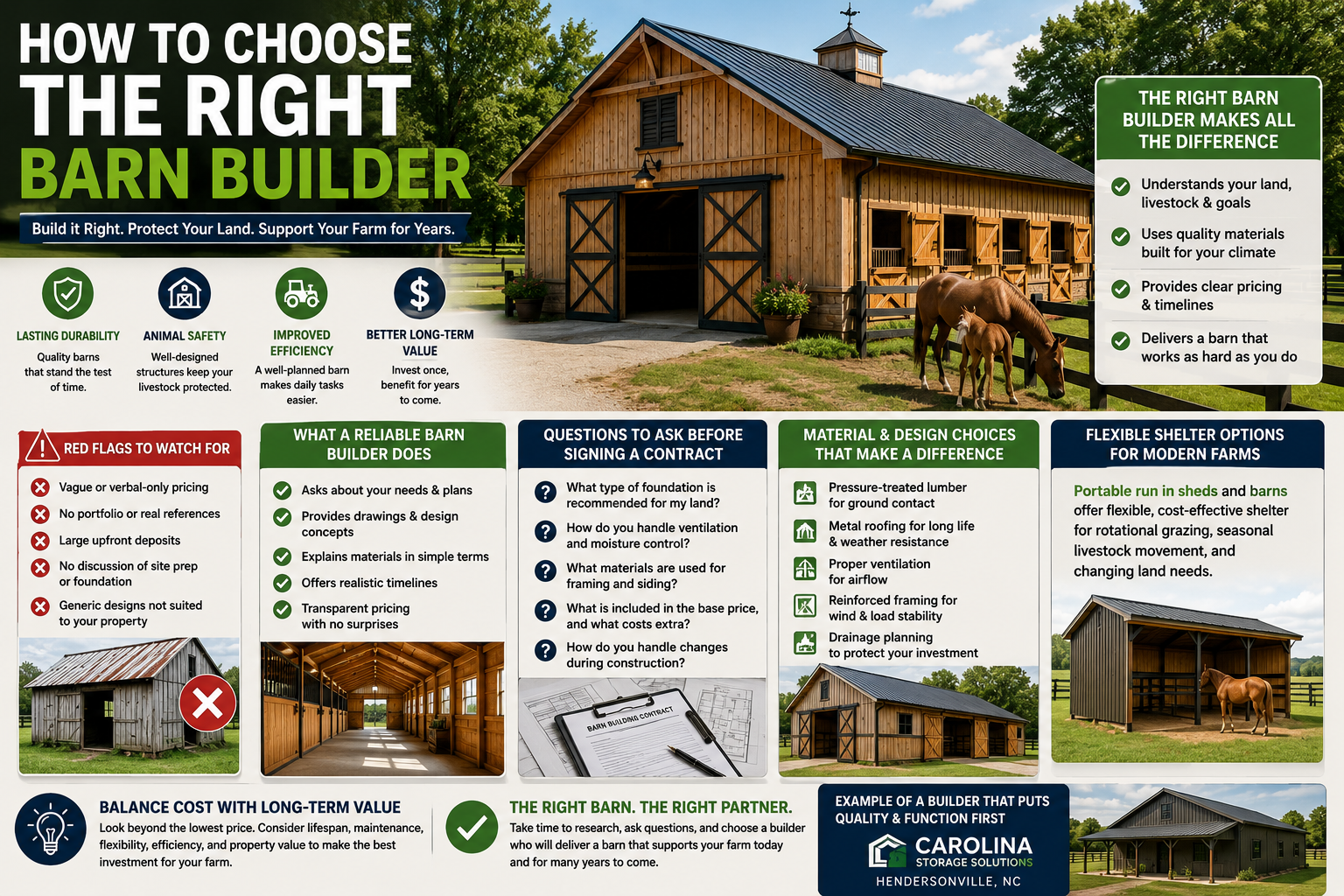
What a Reliable Barn Builder Actually Looks Like
A trustworthy barn builder does not just sell you a structure. They guide you through decisions and help you understand what will actually work for your land and usage needs.
Reliable builders tend to:
- Ask detailed questions about livestock, storage, and plans
- Provide clear drawings or design concepts before construction
- Explain material choices in simple, practical terms
- Offer realistic timelines instead of rushed promises
- Be transparent about pricing and potential add-ons
One example of a company that reflects this approach is Carolina Storage Solutions in Hendersonville, NC, which focuses on practical, customized structures designed for long-term use rather than one-size-fits-all solutions. Working with builders like this can help small farm owners avoid costly design mistakes early in the process.
Questions You Should Always Ask Before Signing a Contract
Before committing to any barn project, take time to ask direct and specific questions. A good builder will answer them without hesitation.
Some of the most important questions include:
- What type of foundation is recommended for my land type?
- How do you handle ventilation and moisture control?
- What materials are used for framing and exterior siding?
- What is included in the base price, and what costs extra?
- How do you handle changes or adjustments during construction?
These questions not only give you clarity but also reveal how experienced the builder really is.
Material and Design Choices that Make a Difference
Barn durability depends heavily on material selection. Many issues that appear years later, such as warping, leaks, or weak framing, can often be traced back to poor material choices.
Key considerations include:
- Pressure-treated lumber for ground contact areas
- Metal roofing offers a longer lifespan and weather resistance
- Proper spacing for ventilation and airflow
- Reinforced framing for wind and load stability
- Drainage planning around the barn site
Design is equally important. A well-designed barn takes into account how animals move, how equipment is stored, and how seasonal weather affects usability.
Understanding Flexible Shelter Options for Modern Farms
Not every farm needs a fully enclosed barn. In many cases, especially for hobby farms or rotational grazing setups, flexible shelter options can be more practical and cost-effective.
It is where modular and semi-open designs become useful. Options like portable run-in sheds and barns allow farmers to provide shelter where and when needed without committing to a permanent structure at a single location. These types of shelters are especially helpful for managing pasture rotation, seasonal livestock movement, and changing land use needs.
They also reduce long-term maintenance demands while still offering reliable protection from sun, wind, and rain.
Balancing Cost with Long-Term Value
It is tempting to choose the lowest price when comparing barn builders, especially for small farms working within tight budgets. However, upfront savings can quickly disappear if repairs or replacements are needed within a few years.
Instead of focusing only on cost, consider:
- Expected lifespan of the structure
- Maintenance requirements over time
- Flexibility for future expansion
- Energy and ventilation efficiency
- Resale or property value impact
Final Thoughts
Choosing the right barn builder is not just a construction decision. It is a long-term investment in how your farm functions every day. The right partner will help you avoid design mistakes, choose better materials, and build something that actually fits your land and lifestyle.
Taking time to carefully evaluate builders, ask the right questions, and understand your options can make the difference between a structure that constantly causes problems and one that quietly supports your farm for years to come.