Ensuring your home has a reliable and visually appealing roof is a top priority for any homeowner. The world of residential roofing is constantly evolving, blending the latest materials and techniques with classic design principles. Every decision you make, from material selection to maintenance routines, impacts your roof’s longevity and looks.
Having a well-installed and maintained roof protects your family and possessions, but it also boosts curb appeal and overall property value. Choosing the right combination of products and services can be overwhelming, especially with so many options available. Understanding your roof’s unique demands, local climate, and best industry practices will help you make informed choices that stand the test of time.
Today’s roofing trends put a premium on durability and energy efficiency, meaning your investment should be strategic and tailored to your home’s specific needs. The following sections highlight essential aspects, including installation, routine upkeep, and energy considerations, that will help your roof stay strong through all seasons.
When you address these foundational elements, you can reduce the risk of common problems and ensure your roof performs at its best for decades. Seeking out professional guidance and quality materials is always a wise path as you navigate your roofing journey.
Selecting the Right Roofing Materials
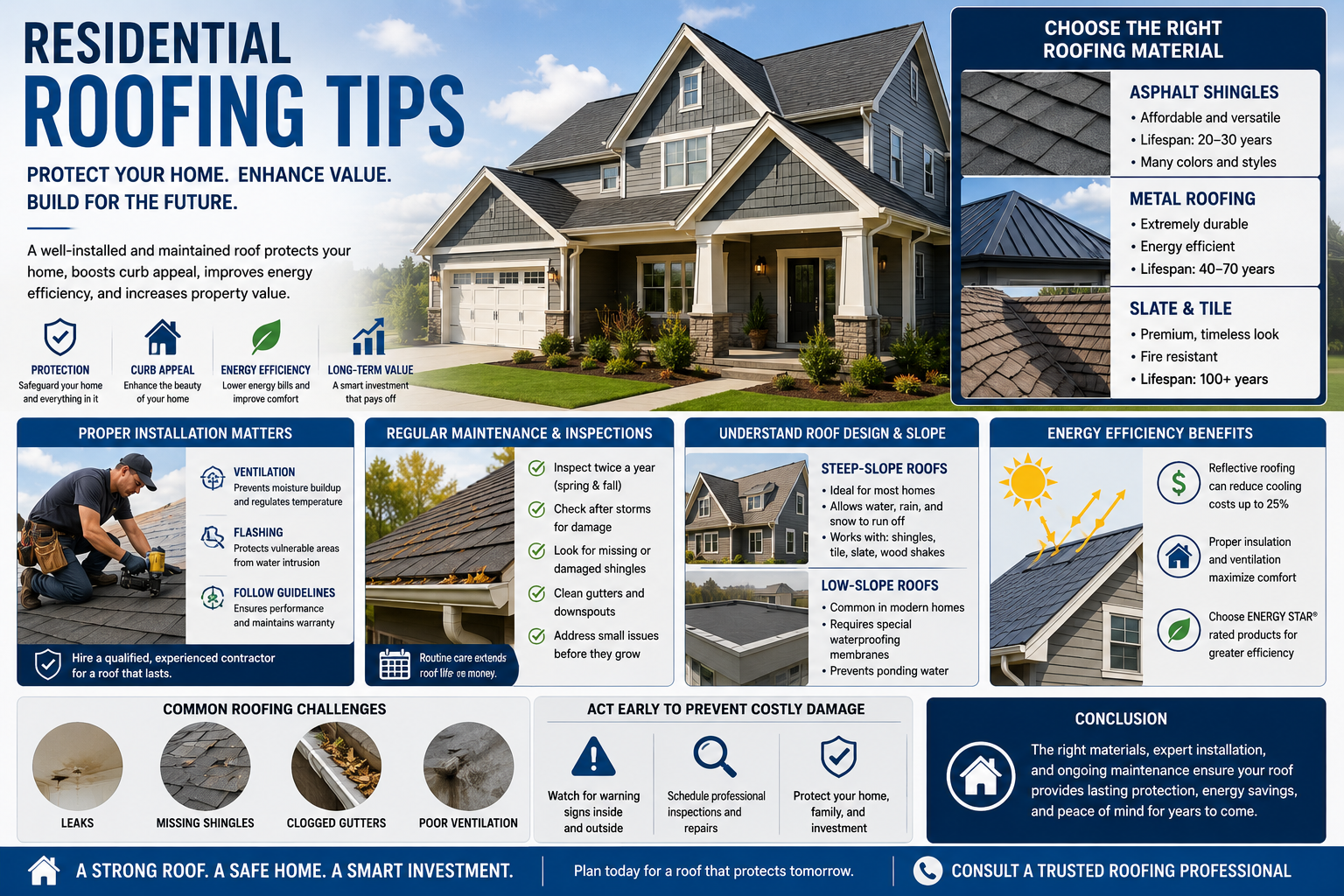
Material selection forms the foundation for an enduring and efficient roof. Homeowners today can choose from an array of options, each offering distinct benefits and aesthetics:
- Asphalt Shingles: As a popular choice across North America, asphalt shingles combine affordability with ease of installation. They generally offer a lifespan of 20 to 30 years, making them suitable for most residential applications.
- Metal Roofing: Known for their remarkable durability and energy-saving properties, metal roofs can last between 40 and 70 years. They come in several styles and are especially valued in regions susceptible to storms and temperature extremes.
- Slate and Tile: These materials deliver a distinctive, upscale look and can endure for more than a century when correctly installed. However, they require a robust roof structure due to their significant weight.
To make the right choice, weigh factors such as your local weather patterns, architectural preferences, and overall budget. For example, homes in hurricane-prone regions may benefit from impact-resistant shingles or metal roofing.
Importance of Proper Installation
Even the highest quality materials can fail if improperly installed. Ensuring professional and thorough installation prevents costly issues and protects warranty coverage. Key practices include:
- Ventilation: A well-ventilated roof controls moisture buildup and helps maintain comfortable indoor temperatures year-round.
- Flashing: Flashing, installed around vulnerable joints (like chimneys or vents), keeps water from infiltrating and causing interior damage.
- Adhering to Guidelines: Professional installers follow manufacturer instructions precisely, which is critical to both performance and warranty eligibility.
Selecting an experienced and reputable contractor is essential. Professionals not only install your roof correctly but also help identify potential trouble spots early on, preventing larger issues down the line. Quality workmanship can mean the difference between a roof that lasts decades and one that needs early replacement. For additional insights on choosing a contractor, consult this resource from Consumer Reports’ roofing contractor tips.
Regular Maintenance and Inspections
Ongoing care is the key to maximizing the life and effectiveness of any roof. Set up a calendar for biannual inspections, especially in regions with volatile weather patterns. Recommended maintenance routines include:
- Checking the roof in the spring and fall for damaged or missing shingles.
- Conducting post-storm assessments for signs of leaks, punctures, or debris.
- Clearing gutters and downspouts to maintain proper drainage and prevent water buildup.
Routine inspections help you catch minor problems, such as dislodged shingles or small leaks, before they turn into major expenses.
Understanding Roof Design and Slope
The shape and pitch of your roof play a decisive role in both the materials you should use and their performance over time. Steep-slope roofs are a hallmark of traditional residential construction, accommodating most standard materials like asphalt shingles, tiles, and wood shakes. In contrast, low-slope designs are often found on contemporary homes and require specialized waterproofing membranes to prevent pooling water.
Understanding these distinctions helps you and your contractor select compatible systems for optimal performance. Additionally, a proper slope ensures that rain and snow are efficiently directed away from the home, keeping the attic and living spaces dry and safe.
Energy Efficiency Considerations
Modern roofing systems can lower your energy bills and boost indoor comfort. Reflective materials, especially metal with cool coatings, send sunlight away from your home, reducing summertime cooling costs by up to 25 percent. Proper attic insulation and ventilation work in concert with these materials to maintain stable indoor temperatures throughout the year.
Those investing in roofing upgrades may consider energy-efficient colors and products certified by programs such as ENERGY STAR, which help homeowners save money while reducing environmental impact.
Addressing Common Roofing Challenges
Timely attention to common issues like leaks, missing shingles, or ventilation problems helps maintain your roof’s integrity. Ignoring these challenges may cause extensive water damage, mold growth, or even the need for roof replacement. Enlisting a professional for inspections and repairs ensures subtle or hidden problems don’t become major liabilities.
Educating yourself on roof-related symptoms, like stained ceilings or unusual attic humidity, lets you intervene early, keeping your home structurally secure for years to come.
Conclusion
Investing in quality roofing materials, expert installation, and ongoing maintenance positions your home for decades of protection and energy efficiency. Policymakers and homeowners alike benefit from understanding the best practices that set modern residential roofing apart. By taking proactive steps now, you’ll enjoy peace of mind and lasting value from your roof investment.