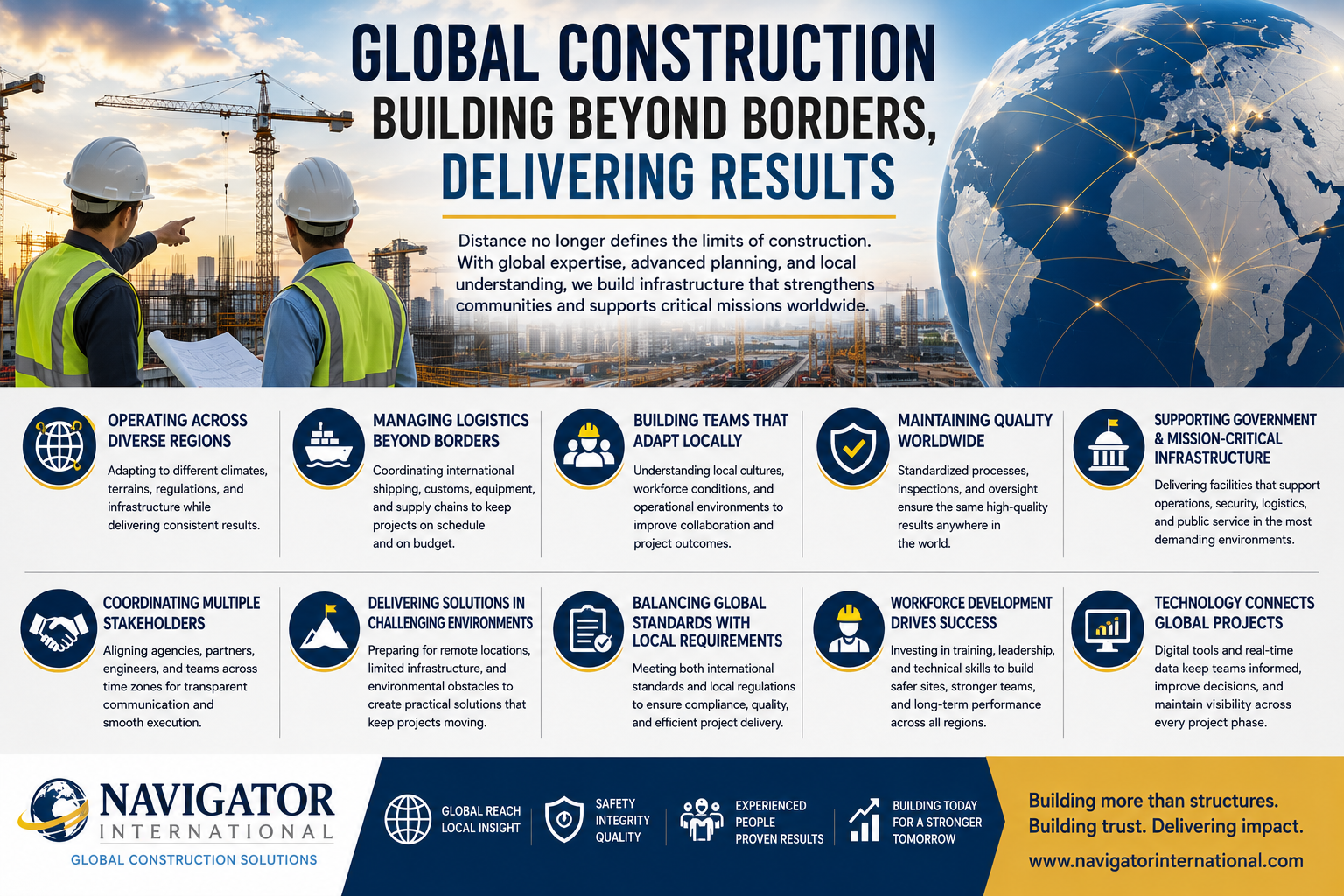
Distance no longer defines the limits of modern construction. Large-scale projects often require teams that can coordinate across countries, adapt to different operating environments, and maintain consistent standards regardless of location. The ability to deliver reliable results on an international scale has become one of the defining characteristics of successful global construction organizations.
Operating Successfully Across Diverse Geographic Regions
Construction methods that work in one part of the world may not automatically translate to another. Climate conditions, terrain, infrastructure availability, and local regulations often require project teams to adjust their approach while maintaining overall performance goals.
Organizations with international experience develop systems that support consistency without ignoring regional differences. Navigator International Global Construction projects benefit from this balance, allowing teams to perform effectively in a variety of geographic settings while remaining focused on project objectives.
Managing Logistics Beyond National Borders
Moving equipment, materials, and personnel across international boundaries involves far more complexity than domestic projects. Customs procedures, transportation schedules, shipping regulations, and supply chain coordination all influence project success.
Careful logistical planning helps prevent delays that could impact schedules and budgets. Global construction teams often spend significant effort organizing procurement and transportation strategies before field operations begin, ensuring resources arrive where they are needed when they are needed.
Building Teams That Adapt to Local Conditions
Every project environment introduces unique cultural, operational, and workforce considerations. Construction professionals who understand how to work effectively within different regions often contribute to stronger project outcomes and better stakeholder relationships.
Adaptability becomes especially valuable when projects involve multinational teams. Nav Int recognizes that understanding local conditions helps improve communication, collaboration, and execution throughout the construction process.
Maintaining Consistent Quality Across Multiple Locations
Project quality should not vary based on geography. Clients expect the same level of workmanship, accountability, and attention to detail whether a project takes place close to home or on the other side of the world. Successful organizations establish quality systems that travel with the project team. Standardized processes, inspections, and oversight measures help maintain performance expectations regardless of location or project complexity.
Supporting Government and Mission-Critical Infrastructure
Many international construction projects support facilities that play an important role in operations, security, logistics, or public service. These environments often require a deeper understanding of project requirements and operational priorities.
Navigator International government construction experience contributes valuable insight when working in sensitive or mission-focused environments. Understanding the purpose behind a facility often helps align construction activities with broader organizational goals.
Coordinating Large Projects Across Multiple Stakeholders
International projects frequently involve government agencies, local authorities, engineers, subcontractors, consultants, and client representatives located in different regions. Effective coordination helps ensure everyone remains aligned despite geographic separation.
Communication systems become particularly important under these conditions. Consistent reporting, project updates, and stakeholder engagement help reduce misunderstandings while supporting smoother project execution.
Delivering Construction Solutions in Challenging Environments
Remote locations often present obstacles that urban projects rarely encounter. Limited infrastructure, restricted site access, supply challenges, and environmental conditions can all affect how construction activities are planned and executed.
Experienced international teams prepare for those realities long before arriving on-site. Anticipating challenges early allows project managers to create practical solutions that support continuity throughout construction.
Balancing Global Standards With Regional Requirements
International construction requires compliance with both organizational standards and local regulations. Building codes, labor requirements, environmental rules, and permitting procedures often differ significantly from one country to another.
Organizations operating globally must understand how to satisfy both sets of expectations simultaneously. This balance helps projects move forward efficiently while maintaining compliance and quality standards.
Workforce Development Strengthens Long-Term Success
People remain one of the most valuable assets in any construction project. Successful international organizations invest in training, leadership development, technical expertise, and workforce readiness to support project performance across multiple regions.
Strong teams often contribute to safer job sites, better decision-making, and improved project outcomes. Building capable personnel creates benefits that extend far beyond a single project or location.
Technology Supports Global Project Coordination
Modern construction relies heavily on technology to connect teams working across different time zones and continents. Digital reporting, project management platforms, scheduling tools, and communication systems help maintain visibility throughout the project lifecycle.
Access to accurate information improves decision-making and accountability. Technology allows international construction teams to remain connected while managing complex projects across large geographic areas.
Creating Reliable Partnerships Across International Markets
Long-term success in global construction depends on more than technical expertise. Strong relationships with clients, local partners, suppliers, and stakeholders often influence how effectively projects move from planning to completion.
Trust develops through consistent execution, transparent communication, and dependable performance over time. Navigator International continues supporting international construction initiatives through experienced leadership, disciplined project management, and global capabilities that help clients achieve successful outcomes across diverse operating environments.