When people talk about schools, they usually start with academics. Course offerings, schedules, and expected outcomes dominate those conversations. Far less attention is given to the physical and social environment where learning actually takes place, even though students spend most of their waking hours inside it.
A campus is not a neutral container. How buildings are arranged, where students gather, and how quiet or crowded a space feels shape daily behavior in subtle ways. Over time, those influences affect how students manage focus, relationships, and personal responsibility.
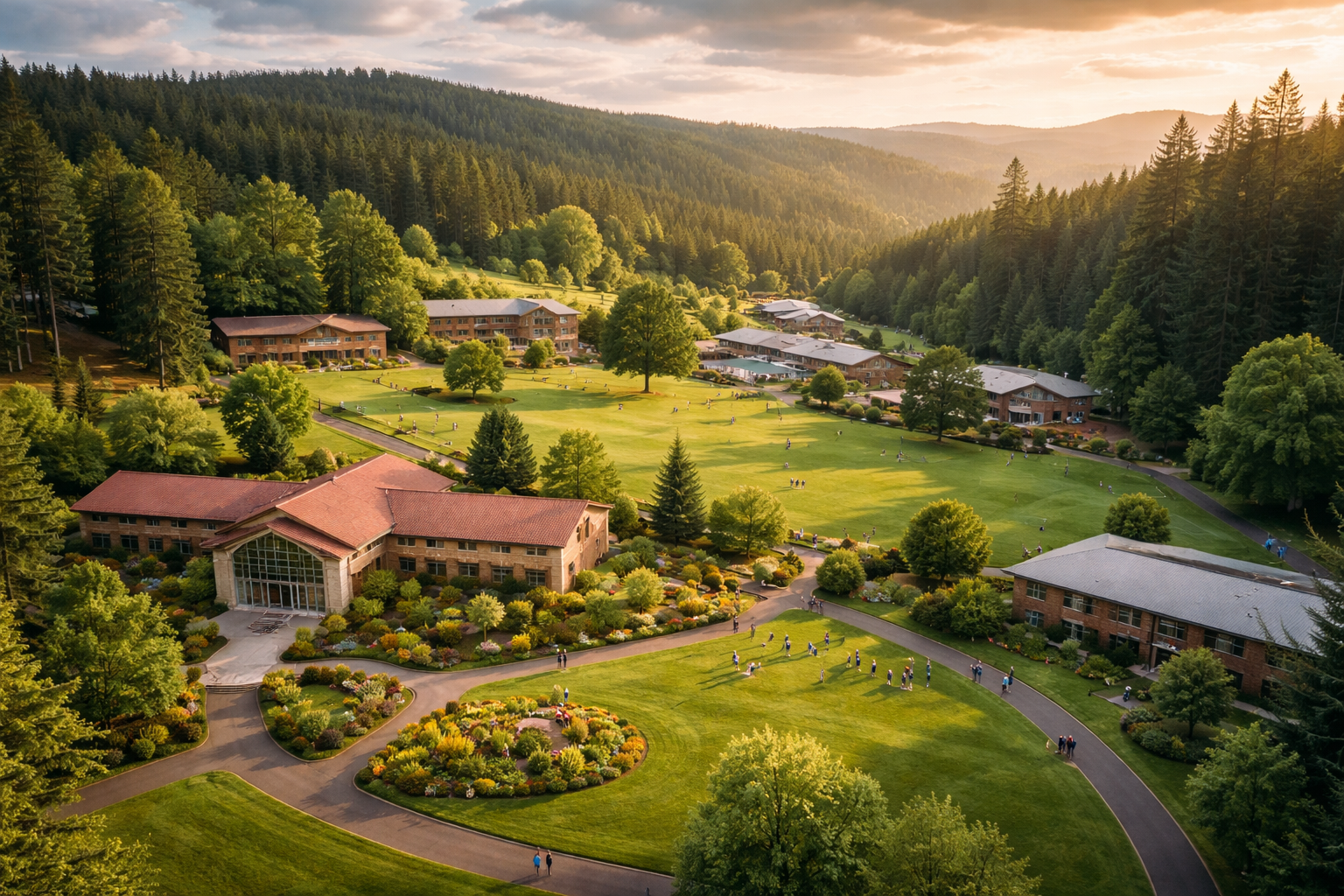
Some boarding schools make that environment a defining part of the educational experience. One example is Delphian School, a co-educational boarding and day school situated on a large rural campus in the Pacific Northwest, where daily life and learning unfold within the same shared setting.
This comparison is not about ranking systems or questioning the value of public education. Many public schools support their students well and serve important community roles. The distinction explored here focuses on how boarding school campuses organize daily life and how that organization changes the student experience in ways that are easy to overlook.
When School Is Where Life Happens
In a boarding environment, the school day doesn’t end in the afternoon. Meals, study periods, recreation, and sleep all take place within the same setting. That continuity changes how students relate to their time because there is no daily transition that separates school from everything else.
Responsibilities carry over from one part of the day to the next. Unfinished work, missed commitments, or unresolved conflicts do not disappear when students leave a classroom. They remain part of the shared environment and tend to surface again quickly.
For some students, this feels restrictive at first. The absence of a clear boundary between structured learning and personal life can be uncomfortable. Over time, many adjust by building routines that feel steadier and more self-directed, simply because avoidance becomes harder to sustain.
Design That Shapes Behavior
Campus design influences behavior without constant supervision. Study spaces, common areas, and walkways communicate expectations through layout alone. Students respond to those cues even when no one is actively enforcing rules.
When classrooms, libraries, and residences sit close together, transitions take less effort. Students spend less time preparing to move from one place to another and more time settling into work. That physical consistency supports longer periods of focus, an effect supported by research showing that features of the built learning environment can account for roughly 16 percent of the variation in students’ academic progress, as documented in a large-scale study published in Building and Environment examining factors such as light, layout, and environmental conditions.
Quiet spaces matter as much as proximity. When silence is built into the environment rather than imposed through rules, expectations become part of daily habit. Students begin to associate certain places with concentration and adjust their behavior accordingly.
Over time, these spatial cues recede into the background. What remains are habits. Students no longer think consciously about where to work or how to behave in certain settings because the environment has already shaped those expectations for them.
Learning to Live With Others
Residential life places students in close proximity with one another for long stretches of time. Shared rooms, communal schedules, and limited private space make interaction unavoidable. Everyday routines bring students into repeated contact, which quickly reveals habits, preferences, and points of friction.
Disagreements are common in this setting, not because students are unusually confrontational, but because avoidance is difficult. Research examining residential life dynamics emphasizes that interpersonal conflict is a routine part of shared living environments and plays a meaningful role in student development, according to findings published in a study on conflict resolution and residential living environments that examines how close quarters, differing expectations, and daily interaction shape behavior and accountability.
Those moments of tension tend to surface early and demand resolution. Small issues rarely remain private for long, and students learn that their behavior affects others in immediate, visible ways. That visibility changes how responsibility is understood and practiced.
Not every student adapts easily. Some struggle with the lack of distance or the constant presence of peers. For others, the environment accelerates social growth by making communication, compromise, and accountability daily requirements rather than abstract expectations.
Belonging That Comes From Repetition, Not Programs
Community on a boarding campus tends to form through routine rather than organized initiatives. Students see the same people at meals, study halls, activities, and evening check-ins. Over time, familiarity builds through repetition rather than planned social programming.
This consistency contrasts with broader patterns in secondary education. Research on student connectedness shows that only about half of U.S. high school students report feeling a sense of belonging at school, according to findings summarized in a national overview of student belonging published by Qualtrics, which examined how often students feel accepted, noticed, and included in their school communities.
On a residential campus, absence is harder to miss. When someone disengages or withdraws, it becomes visible quickly. That visibility can feel uncomfortable, but it also reinforces the idea that participation matters and that individuals are noticed within the group.
Belonging in this setting does not depend on slogans or special events. It develops quietly through shared schedules, repeated interaction, and the expectation that students will show up for one another day after day.
Delphian School: Space to Walk, Think, and Reset
Larger campuses allow students to move between commitments rather than rush from one obligation to the next. Walking between buildings introduces brief pauses that help reset attention and reduce cognitive fatigue. At schools like Delphian School, where academic, residential, and activity spaces are spread across a wide campus, movement becomes a built-in part of the daily rhythm rather than a logistical inconvenience.
Access to outdoor space changes pacing across the day. Students can step away from indoor environments without leaving campus, which makes breaks feel more natural and less disruptive. Time outside does not require planning or permission; it happens in the margins between classes, meals, and responsibilities.
Over time, students learn how physical space affects their focus and energy levels. They make small adjustments to habits based on firsthand experience rather than instruction, developing a more intuitive sense of balance between effort, rest, and attention.
Teachers as Daily Presences, Not Scheduled Interactions
Faculty on boarding campuses often appear in multiple roles across the day. They teach classes, supervise activities, oversee study periods, and share common spaces with students outside formal instructional time. This repeated presence changes how authority is perceived. Instead of being limited to the classroom, adults are seen navigating the same rhythms and constraints as students, which makes expectations feel more consistent and less situational.
Questions and conversations do not stay confined to classrooms or scheduled office hours. Guidance often happens during meals, while walking between buildings, or in brief, unplanned moments that arise naturally from shared routines. Those interactions tend to lower the barrier to asking for help. Feedback feels less staged and more responsive because it emerges in real time rather than being delayed or formalized.
That level of visibility can feel intense for some students, particularly early on. There is less anonymity and fewer places to disappear when motivation drops or problems arise. Over time, however, familiarity tends to replace discomfort. When adults are present across multiple settings, relationships develop through accumulation rather than performance, and trust grows from repeated, ordinary interaction rather than singular moments of evaluation.
Freedom With Edges
Boarding schools usually offer students more control over their time than traditional day schools, but that control operates within clearly defined boundaries. Unstructured periods exist, yet they are framed by expectations around participation, preparation, and follow-through. Students are responsible for deciding how to use open time, but they do so in an environment where their choices have visible effects on their work, routines, and relationships. Freedom is present, but it is not abstract or detached from consequence.
When that freedom is misused, the response tends to be immediate. Missed responsibilities are noticed within the community, whether through unfinished work, disrupted schedules, or unfulfilled commitments. Feedback becomes difficult to ignore because it emerges from daily interaction rather than formal discipline alone. Students learn to manage the tension between autonomy and accountability, adjusting behavior through experience rather than instruction and developing a more durable sense of responsibility.
Cultural Exposure That Isn’t Confined to the Classroom
Living alongside peers from different backgrounds turns differences into a daily experience rather than a scheduled discussion. Conversations continue outside formal lessons and often surface in ordinary moments tied to shared routines, work, and downtime. Exposure is not limited to designated topics or activities; it unfolds through proximity and repetition, which makes differences harder to ignore and easier to engage with over time.
Cultural differences show up in routines, communication styles, and unspoken assumptions about time, privacy, and responsibility. Students encounter these differences repeatedly in small parts all, practical ways, which reduces abstraction and pushes adjustment to happen through lived experience rather than explanation. Misunderstandings become opportunities to recalibrate expectations rather than isolated incidents.
The effect is gradual rather than dramatic. Regular exposure builds comfort with disagreement and unfamiliar perspectives through ordinary interaction. Students learn how to listen, adapt, and respond without relying on formal frameworks, developing habits of engagement that feel more durable than those shaped by structured exercises alone.
Facilities That Support the Full Day, Not Just the School Day
Boarding campuses are designed to function from morning through night, supporting the full range of daily activity rather than only scheduled instruction. Academic spaces exist alongside areas for rest, recreation, and creative work within the same environment, which reduces the need to compartmentalize different parts of life. Students move between work and recovery without leaving campus, and that continuity shapes how they pace themselves across the day.
When facilities are nearby, participation becomes easier to sustain. Students are more likely to attend activities, use shared spaces, or follow through on commitments when access does not require extra planning or transportation. Engagement becomes a matter of choice rather than logistics, which lowers friction and increases consistency over time.
This integration encourages balance through practice rather than instruction. Academic work, physical activity, and personal interests all compete within the same day, and students learn to allocate effort based on energy and priority rather than external scheduling alone. Over time, they develop a more realistic sense of how to distribute attention across multiple demands without treating any single one as separate from the rest of daily life.
The structure of a campus shapes how education is lived each day. On a campus like Delphian School, space, routine, and proximity amplify the effects of teaching without replacing it. The environment works quietly in the background, reinforcing expectations through daily patterns rather than explicit rules. That influence accumulates over time, shaping habits, attention, and responsibility in ways that extend beyond individual lessons.
These settings do not suit every student equally. The same continuity that supports growth for some can feel confining for others, especially early on. When families consider schools, academic programs often take center stage, but looking more closely at how daily life is organized offers another way to evaluate fit and to understand how students learn and develop in the places where they spend most of their time.